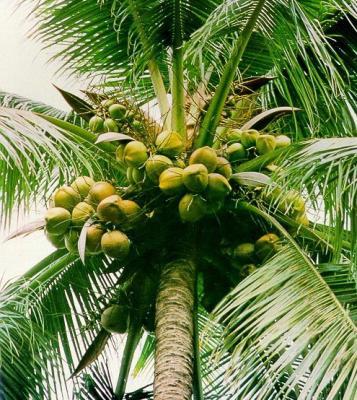
The coconut palm (Cocos nucifera) is among the most extensively used trees worldwide and strongly associated with tropical landscapes. This plant, hardy in U.S. Department of Agriculture plant hardiness zone 10 and warmer areas, serves as an excellent specimen planting or background tree and may, particularly when it is young, offer potential as a container specimen. Multiple cultivars of the coconut palm offer varying degrees of trunk crookedness, leaf petiole and fruit colors, growth rates, adaptability to soil conditions and levels of disease resistance.
Uses
The coconut is the most cultivated nut in the world and a very important commercial crop in many tropical countries. The nut meat, coconut oil from the dried meat and milk are used for drinks, cooking, cosmetics and numerous other types of products. Unopened flowers can potentially produce coconut molasses and the hard-grained shell of the nut is carved into practical utensils and ornamental objects. Trunk wood is used for building and ornamental purposes and the coir from the fruit husk is woven for fabric or ropes.
Trunk and Leaves
The coconut palm tree has a single, smooth columnar trunk and can grow 50 to 100 feet tall, depending on the cultivar. The trunk is light grayish-brown in color, sometimes swollen at the base and usually gracefully curved or leaning. Leaves of the coconut palm tree are feather shaped, growing up to 18 feet long with individual lance-shaped leaflets that are 2 to 3 feet long and 2 to 3 inches wide. The evergreen leaves grow in a terminal crown at the top of the trunk.
Flowers and Fruits
The coconut flowers emerge from canoe-shaped sheaths within the crown of leaves. Each inflorescence is 2 to 3 feet long and contains light yellow female flowers near the base of the branchlet and smaller male flowers at the end of the branchlet. The female flowers mature into a fruit 15 inches long and 12 inches wide. The fruit has a thick, fibrous husk around a nut about 6 to 8 inches wide and 10 to 12 inches long. Within the shell of this nut is a fleshy white layer known as the coconut’s meat or copra and a water liquid known as coconut milk that is absorbed by the meat as the nut ripens. A healthy, mature coconut palm will produce about 50 nuts per year, each weighing approximately 6 pounds.
Propagation
Coconut palms are propagated only from seed. The seeds, or coconut nuts, are ready for planting when they make a sloshing sound upon shaking. Following soaking in water for two or three days, the nut is placed on its side or with the pointed end down in a well-drained site or container with well-drained growing medium and covered about halfway with sand or mulch. Germination occurs best with regular moisture and temperatures between 90 and 100 degrees Fahrenheit and takes three to six months. Coconut palms grow rapidly and can begin to bear fruit after as few as five years.
Other Facts about the tree of life
Found across much of the tropic and subtropic area, the coconut is known for its great versatility as seen in the many domestic, commercial, and industrial uses of its different parts. Coconuts are part of the daily diet of many people. Here are some interesting facts about Coconuts :
1. The origin of the coconut has been lost to history. Coconuts are a prehistoric plant that scientists believe came from the South Pacific around what is now New Guinea.
2. The sailors aboard Vasco de Gama’s ships gave the coconut its name. They called it “Coco”, named after a grimacing face or hobgoblin. When the “coco” came to England, the suffix of nut was added and that’s how the name came about.
3. Coconut oils contain median chain triglycerides which are easy to digest. The oil is source of energy and has an accelerating effect on the metabolism.
4. Coconut oils also contain four growth hormones, that help the development of many organisms. Coconut water is considered the “father of modern tissue culture science”.
5. Coconut Water Can Be Used as a Substitute for Blood Plasma !!!
6. They grow from sandy soils and an abundant amount of sun and rain. Often they are found near the ocean and sustainable to the excessive salt in the air.
7. Coconut trees belong to the plant family known as Arecaceae and are the only species of the genus Cocos. They can grow up to 30 meters high.
8. Coconuts are the seeds of the coconut palm tree and considered a type of nut. The “meat” of the coconut is high in protein; whereas the milk is refreshing, light and low in sugar.
9. Aside from their culinary purposes, they are also used for cosmetic purposes and as a mosquito repellent (burning the husk).
10. Most plants have tap roots. However, the coconut tree has a fibrous root system. The tree gains the nutrition from thin branching roots growing from the stem.

